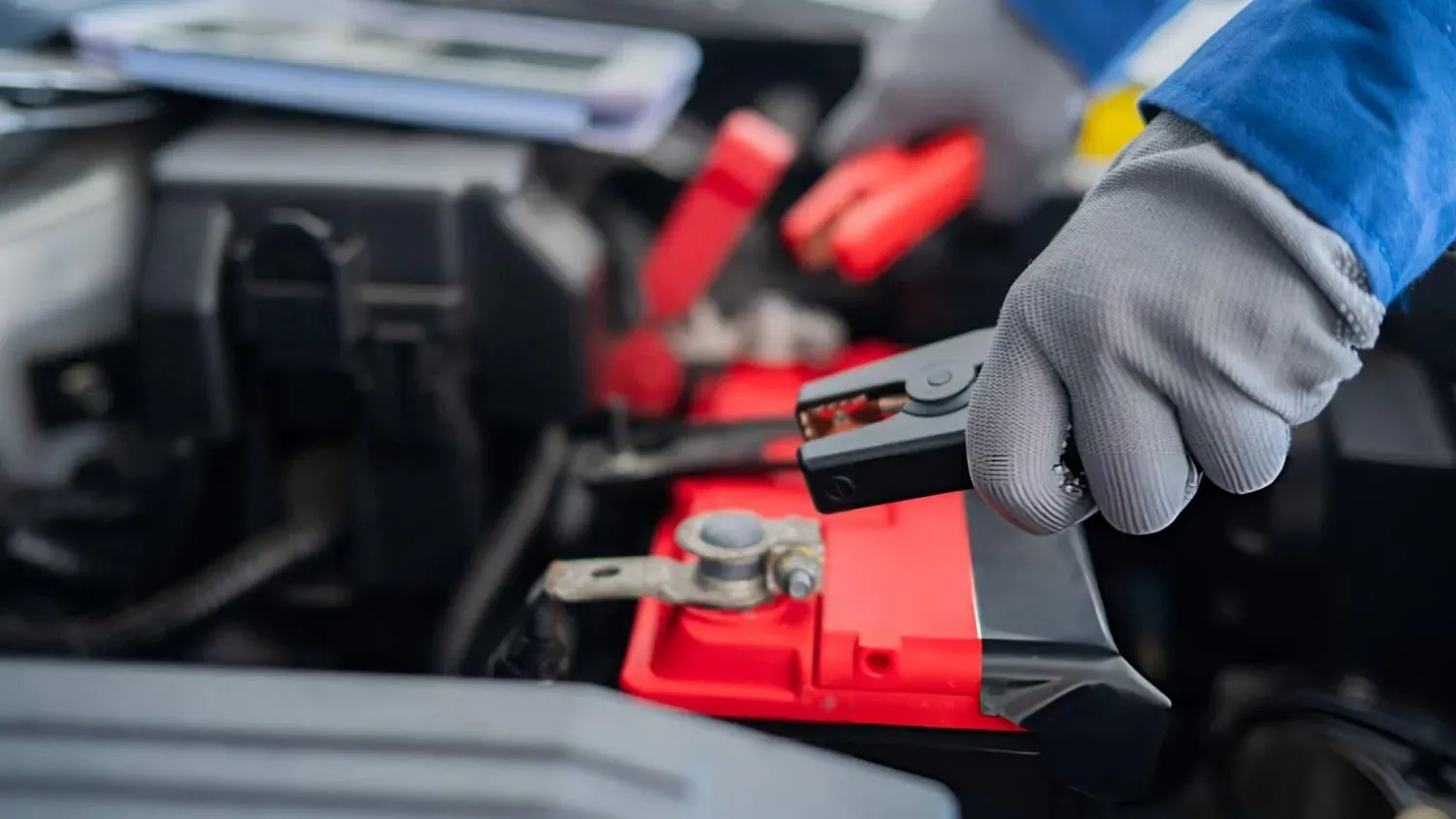
A flat battery rarely fails without warning. Most of the time, your car gives you early signs before it happens. Know what to look for, run a few simple checks, and you can prevent breakdowns, get more life out of the battery, and avoid replacing it before you actually need to.
Watch for early warning signs
Poor battery health usually shows up in everyday driving. Common symptoms:
- Slow engine cranking on startup
- Dim headlights, especially at idle
- Dashboard lights flickering
- Clicking sounds when you turn the key or press the start button
- Needing jump-starts more often
None of these mean the battery's dead. But they're a sign it's time to get it checked.
How to check battery health
You don't need specialised equipment for this. Start with a visual check. Look for loose terminals, corrosion on the posts, a swollen case, or leaks. Any of these can hurt performance even if the battery itself is fine.
Then measure voltage with a multimeter, after the car's been parked for a few hours. A healthy battery usually reads around 12.6V or higher. Below that, it may be discharged or starting to weaken. Voltage only tells you the state of charge, not the battery's actual condition.
Why a load test matters
A battery can show normal voltage and still fail to deliver enough power to start the engine.
That's why professional testing includes a load test, which checks how the battery performs under real starting conditions. It gives a much clearer read on remaining health and tells you whether the battery needs recharging, servicing, or replacing.
Does topping up water help?
Depends on the battery.
For conventional flooded lead-acid batteries, topping up water can help once the electrolyte level drops. Use distilled water, fill to the recommended level, and do it after the battery's been fully charged. Sealed maintenance-free batteries, AGM or EFB, should never be opened or topped up. That can damage them.
Don't ignore the charging system
A healthy battery depends on a healthy charging system. While you drive, the alternator recharges the battery and the voltage regulator controls the charging voltage. If either one fails, the battery ends up chronically undercharged or overcharged, and either way shortens its life.
Even a brand-new battery can fail early if the charging system isn't working right.
When the battery isn't the real problem
If your battery keeps going flat soon after replacement, the battery itself might not be the cause.
Other signs point to the charging system instead: headlights getting noticeably brighter when you rev the engine, electrical performance that fluctuates, or charging voltage that's inconsistent. In these cases, check the alternator and charging system, not just the battery.
Simple habits that extend battery life
- Check for corrosion and loose terminals
- Test voltage periodically
- Avoid short trips where you can
- Service the alternator and charging system during routine maintenance
- Top up distilled water only if your battery is a serviceable flooded type
Monitoring your battery doesn't take long, but it can save you an inconvenient breakdown or an unnecessary replacement. If you're seeing early warning signs, or just want peace of mind before a long drive, a professional battery and charging system inspection can catch problems before they leave you stranded.
Choose right, choose ASTRA
A car battery does much more than start your engine. It also supplies power to your vehicle's growing number of electrical and electronic components. Choosing the right battery helps ensure your vehicle performs reliably, especially with today's increasingly advanced automotive technologies.
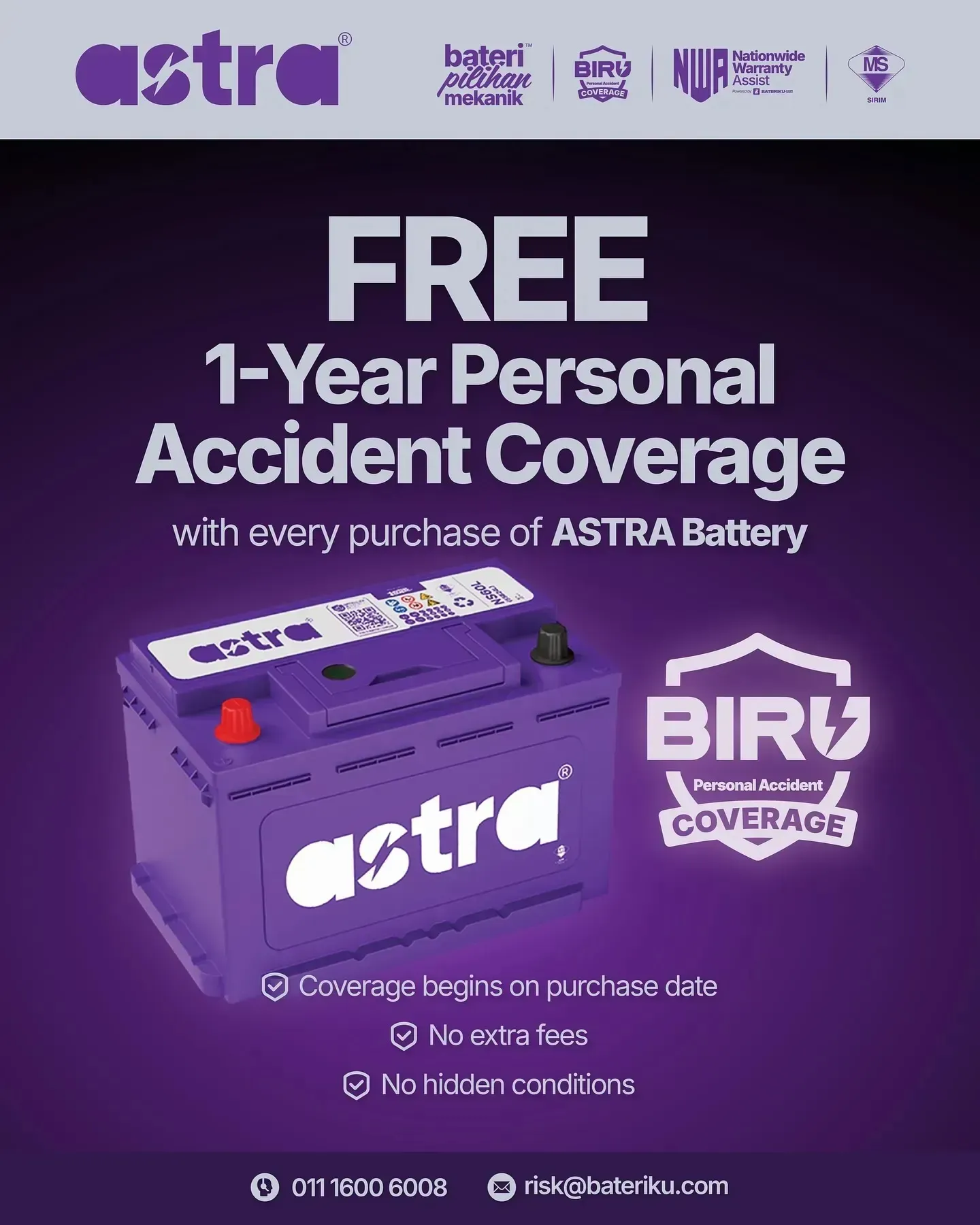
Every one of ASTRA Battery's 28 product variants is SIRIM-certified, reflecting its compliance with recognised Malaysian quality standards. With millions of ASTRA batteries powering vehicles across Malaysia, the brand has earned the trust of drivers for dependable performance and reliability.
Whether you drive a Perodua, Proton, Toyota, Honda, or any other popular vehicle, there's an ASTRA Battery designed to fit your car. For the easiest way to find the right model, refer to the ASTRA Battery Catalogue.